
Quantum Computing’s Overlooked Wildcard: The Emergence of Quantum-Driven Cryptographic Ecosystem Fragmentation
As quantum computing approaches operational scale, a subtle but significant weak signal is emerging around the fragmentation of cryptographic standards and ecosystems, driven by varying national and industrial responses to quantum threats. This divergence may fundamentally reshape capital flows, regulatory frameworks, and competitive dynamics globally within the next 5–20 years.
While much attention focuses on the quantum threat to encryption itself, less recognized is how heterogeneous threat-modeling and quantum readiness efforts—coupled with differing national strategies—could fracture the global cryptographic landscape. This fragmentation would impose persistent strategic and operational complexity across industries reliant on secure data exchange, especially financial services, automotive, and critical infrastructure. Decision-makers must consider the structural consequences of asynchronous quantum-cryptographic transition beyond mere algorithmic upgrades.
Signal Identification
This development qualifies as a weak signal with emerging trend characteristics. The signal arises from observed indications that organizations and governments are not aligning on a common timeline or approach to quantum-resistant cryptography, leading to ecosystem divergence. The signal’s horizon is medium- to long-term (5–20 years), with a medium plausibility band dependent on accelerating quantum computing capabilities and regulatory responses. The sectors exposed include cybersecurity, financial services, automotive (especially quantum-enabled mobility), cloud services, and government agencies responsible for sensitive technologies.
What Is Changing
Microsoft’s call for expanded threat-modeling to uncover quantum cryptographic vulnerabilities is indicative of heightened awareness but also exposes operational variability in readiness approaches (Campus Technology 24/08/2026). This lack of standardized threat models presages asymmetric preparedness across firms and jurisdictions.
Meanwhile, strategic government investments such as the U.S. Department of Energy’s Quantum Genesis initiative promise fault-tolerant quantum computing capability (FedTech Magazine 21/08/2026). This drives urgency in quantum-resilient cryptography development but also reveals a U.S.-centric advancement focus that may be uncoordinated with others, such as Japan’s positioning of commercial quantum applications through cloud access providers like Shunkai and Yaqumo Inc. (Quantum Computing Report 15/08/2026).
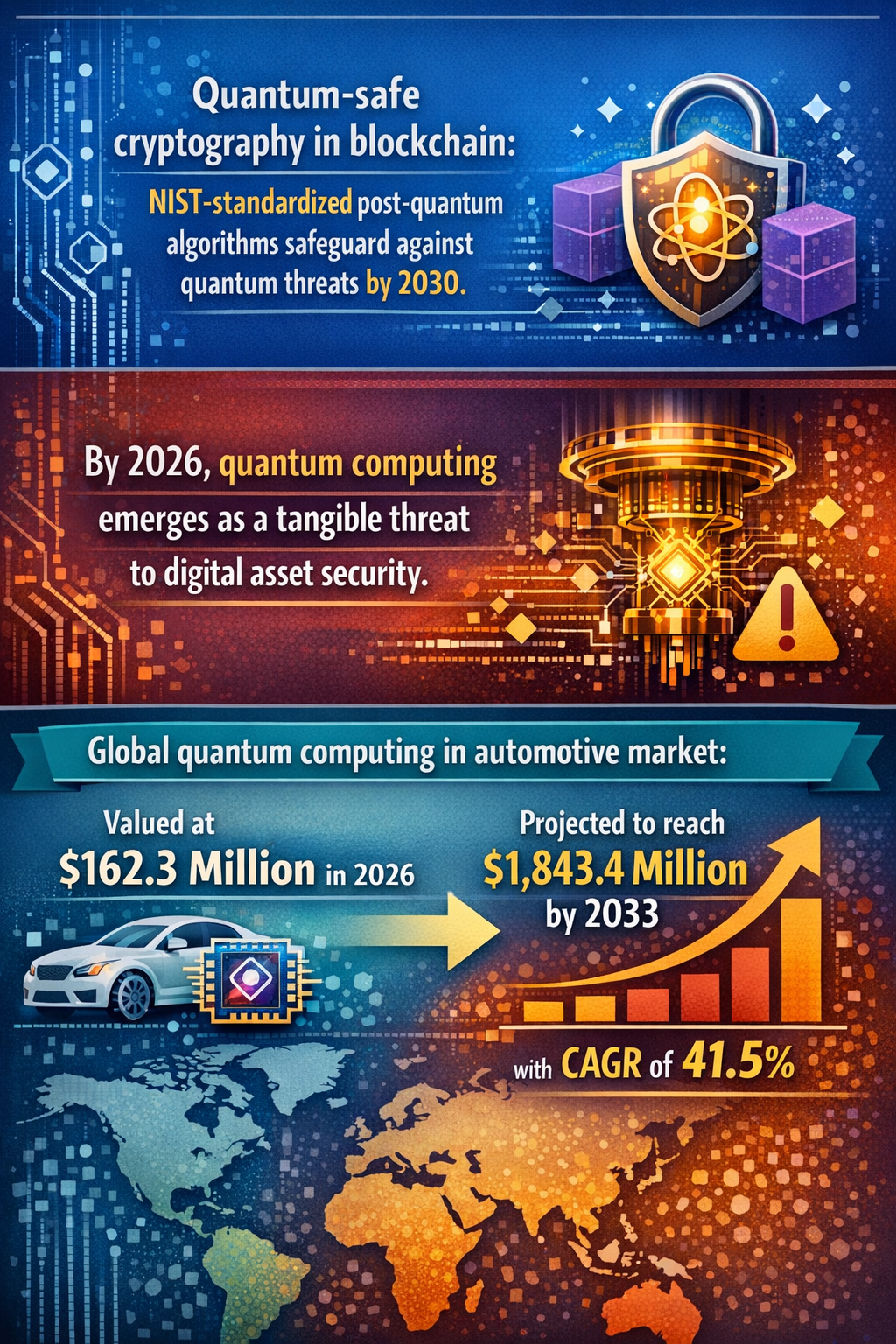
Asia-Pacific’s rapid quantum application expansion in automotive quantum computing (Persistence Market Research 19/08/2026) pushes a market-driven quantum ecosystem that may adopt distinct cryptographic standards tailored to digital security in electric mobility and industrial automation sectors, diverging from Western models.
The growing reality of quantum risk for digital asset security (BMIC AI 07/08/2026) intensifies demand for agile cryptographic ecosystems but also catalyzes localized frameworks responding to differing threat perceptions and technological maturity.
Collectively, these signals point not simply to quantum computing’s cryptographic threat but to the unfolding of a fragmented cryptographic ecosystem influenced by diverse national security priorities, industrial sector needs, and research trajectories. This fragmentation is under-recognized amidst narrative focus on a global “crypto-agility” imperative.
Disruption Pathway
As quantum computers inch toward practical cryptanalytic capability, initial responses have thus far been uncoordinated and regionally siloed, driven by varying levels of quantum readiness and geopolitical posturing. This divergence could accelerate through these mechanisms:
First, disparate threat-modeling exercises increase the likelihood of uneven timelines for transitioning to quantum-resistant algorithms. Some actors may rush deployment without cross-compatibility, while others lag, creating interoperability challenges and market segmentation (Campus Technology 24/08/2026).
Second, sector-specific quantum applications (e.g., Asia Pacific automotive quantum computing) could spawn verticalized cryptographic schemes optimized for particular operational environments, further diverging standards (Persistence Market Research 19/08/2026).
Third, governments prioritizing quantum supremacy and infrastructure resilience—like the U.S. Quantum Genesis initiative—may impose regulatory restrictions favoring domestic cryptographic technologies and limiting cross-border data flows, intensifying ecosystem segmentation (FedTech Magazine 21/08/2026).
Structural adaptations might include new federated trust frameworks or national cryptographic certification regimes, fragmenting the once globalized cybersecurity marketplace. This shift could create feedback loops where fragmented standards raise costs and risks of global digital commerce, encouraging further national or sectoral “crypto fortresses.”
If dominant industrial and regulatory actors fail to coordinate—or actively pursue competitive advantage via cryptographic sovereignty—this ecosystem fragmentation could ossify, driving a structural realignment of commerce, cloud services, and risk governance. Conversely, timely cross-sector and international standard-setting might mitigate these forces.
Why This Matters
Decision relevance is acute given the scale of capital deployment and regulatory posture required for quantum readiness. Firms and governments investing heavily in quantum computing infrastructure and cryptographic upgrades risk stranded assets if divergent standards prevail across critical markets.
Financial institutions, automotive manufacturers integrating quantum technologies, and cloud service providers face exposure from complex compliance requirements and interoperability failures. Regulators must anticipate liability shifts and governance gaps emerging from fragmented cryptographic ecosystems, especially in critical infrastructure and digital asset security domains (BMIC AI 07/08/2026).
Moreover, supply chains underpinning cryptographic hardware and software may bifurcate in alignment with nationalized technology strategies, forcing realignments in vendor selection and capital allocation.
Implications
This signal could plausibly initiate structural change characterized by the erosion of a harmonized global cybersecurity environment. Cryptographic ecosystem fragmentation may increase transactional friction, elevate compliance costs, and constrain market access, effectively reordering competitive landscape dynamics.
However, this development is not inevitable nor synonymous with total fragmentation; coordinated international standardization efforts driven by public/private partnerships and institutions like the National Institute of Standards and Technology (NIST) may counteract these trends. Some analysts interpret differential readiness as a transient phase of innovation diffusion rather than a paradigmatic rift.
Therefore, this fragmentation signal should be understood as a plausible medium- to long-term contingency risk rather than current widespread reality or mere hype.
Early Indicators to Monitor
- Proliferation of regional or national quantum-resilient cryptographic standards or certification bodies
- Patent filings and R&D investments in sector-specific quantum cryptographic protocols
- Policy or regulatory drafts restricting cross-border cryptographic technology interoperability
- Venture funding clustering around localized quantum security startups
- Capital reallocation by cloud and cybersecurity service providers away from global interoperable solutions toward regionally distinct ones
Disconfirming Signals
- Rapid adoption of universally accepted post-quantum cryptographic standards endorsed by major governments and standard bodies like NIST
- Clear multinational agreements enabling cross-jurisdictional quantum security interoperability
- Industry-led global cryptographic interoperability alliances successfully implemented
- Stagnation or delay in quantum computing capabilities limiting cryptanalytic threat urgency
Strategic Questions
- How can investment strategies account for potentially fragmented cryptographic ecosystems to avoid stranded assets?
- What regulatory frameworks are needed to harmonize quantum-resilience efforts and avoid inefficient market segmentation?
Keywords
Quantum Computing; Post-Quantum Cryptography; Cryptographic Fragmentation; Quantum Threat Modeling; Quantum Cryptographic Standards; Quantum Security Regulation; Quantum Automotive Applications
Bibliography
- Microsoft is encouraging organizations to expand threat-modeling exercises to uncover cryptographic dependencies that could leave applications and data vulnerable to future quantum computing attacks. Campus Technology. Published 24/08/2026.
- The Department of Energy, for example, recently announced its Quantum Genesis initiative, which will deploy the world's first fault-tolerant, scientifically relevant quantum computing capability. FedTech Magazine. Published 21/08/2026.
- Looking ahead, continued expansion of electric mobility and industrial automation is expected to position Asia Pacific as one of the fastest-growing markets for automotive quantum computing, creating significant opportunities for technology providers and research partnerships. Persistence Market Research. Published 19/08/2026.
- Shunkai will offer cloud access for research and aims to drive commercial applications through Yaqumo Inc., positioning Japan in quantum computing. Quantum Computing Report. Published 15/08/2026.
- By 2026, the specter of quantum computing may no longer be a distant threat but a tangible concern for digital asset security. BMIC AI. Published 07/08/2026.