
Hidden Dynamics in Sustainable Waste: The Underappreciated Leap of Formalizing Informal E-Waste Sectors in South Asia
Exploring a discreet yet pivotal shift in sustainable waste management, this analysis unveils the rapid formalization of informal electronic waste (e-waste) collection systems in South Asia—primarily India—as a weak signal with profound structural implications for global recycling, industrial realignment, and regulatory frameworks over the next two decades.
While the global discourse largely fixates on circular economy mandates and plastic supply chain reforms, the quietly expanding formal e-waste sector in South Asia signals a transformative industry inflection that could redefine capital flows, governance models, and supply chain logistics for sustainable waste management. This paper outlines how this shift consolidates informal actors, feeds burgeoning recycling capacities, and disrupts entrenched inefficiencies in waste valorization with cascading consequences.
Signal Identification
This development qualifies as a weak signal with emergent momentum crossing into an inflection point over a 10–20 year horizon. The formalization of South Asia’s e-waste sector—exemplified by India’s E-Waste Management Rules (2022) and extended Producer Responsibility (EPR) enforcement—remains under-recognized outside localized policy and market spheres yet possesses high plausibility given ongoing regulatory and economic trends (Persistence Market Research 05/06/2024).
Sectors predominantly exposed include waste management, electronics manufacturing, materials recycling, regulatory bodies, and green finance markets. The trend is especially salient as it may realign capital towards scalable formal recycling infrastructure, wrest market share from informal channels, and impose new compliance demands on multinational firms sourcing from these regions.
What Is Changing
Across the referenced literature, formalization of informal e-waste in South Asia emerges as a discreet powerhouse underpinning structural shifts in sustainable waste management. First, India’s efforts toward regulatory clarity and enforcement mechanisms under the E-Waste Management Rules (2022) have catalyzed growth in licensed e-waste recycling capacity expected to scale substantially by 2033 (Persistence Market Research 05/06/2024). This growth contrasts sharply with other regions where informal sectors persist with limited integration into mainstream formal economies.
Simultaneously, the global push for circular economy plastic supply chains codified by deadlines such as 2026 (Healix.eco 12/08/2026) and EU packaging legislation (EU Regulation 2025/40) (Devera.ai 02/05/2026) corroborate an overarching structural theme: formalized, traceable waste flows enable more efficient resource recirculation and regulatory compliance. However, the dynamics in plastics contrast with e-waste, where South Asia’s formalization surge signals an underappreciated complementary path linking producer responsibility with localized employment and ecosystem development.
The scale of this formalization carries systemic novelty. Prior research typically treats South Asia’s informal e-waste sector as a marginal, ungoverned externality. In contrast, the emerging model integrates these dispersed actors into national recycling infrastructures, generating a vertically connected supply chain of material recovery and value creation. This shift also embeds social innovation by advancing formal employment and environmental health gains simultaneously (Climate Action for Associations 15/03/2026).
Moreover, these dynamics intersect with energy transition ambitions. Refined waste valorization through formal e-waste channels could support cleaner technologies, helping to close the financing and resource loop by feeding critical metals back into net zero ecosystems, an opportunity under-discussed relative to the dominant narrative around plastics and packaging waste (AlJ.com 04/04/2026).
Disruption Pathway
The formalization of informal e-waste actors in South Asia could plausibly mature into a systemic structural change by first reaching a critical mass of compliant processing capacity, incentivized by stringent enforcement of EPR policies and rising material recovery economics. Key accelerating conditions include escalating regulatory penalties for noncompliance, technological diffusion lowering processing costs, and reputable brand requirements pushing upstream supply chain transparency.
This surge stresses existing informal networks by withdrawing their traditional operating leeway and redirecting e-waste flows into licensed channels. Incumbent informal operators may fragment, consolidate with formal companies, or transform into certified micro-entrepreneurs integrated in monitoring systems. Such shifts will, in turn, require new governance and labor frameworks reflecting hybrid formal-informal polycentricities.
Industrial adaptations may include increased vertical integration between electronics manufacturers and recycling entities, capital reallocation toward scalable formal plants, and innovation in logistics technologies to trace and certify e-waste origins. Feedback loops arise as improved traceability enhances resource valuation, which incentivizes further formal participation, creating virtuous cycles potentially supplanting the informal economy.
Potential unintended consequences could include initial displacement of vulnerable informal workers or resistance from entrenched informal actors, pressuring policymakers to design inclusive transition mechanisms. Globally, dominant models of waste governance may transition from export-led informal processing toward territorialized, high-integrity circular hubs especially in rapidly growing markets like India, reshaping global recycling geopolitics.
Why This Matters
Decision-makers must recognize that capital allocation might pivot toward formal e-waste infrastructure development in South Asia, given favorable regulatory trajectories and expanding market formalization. This shift impacts multinational electronics firms’ supply chain due diligence and environmental reporting obligations, likely raising compliance costs but reducing reputational risks.
Regulatory frameworks may evolve to incorporate hybrid formal-informal governance models, imposing new standards and certifications that create market barriers but also opportunities for innovation and social development. Competitive positioning for firms may hinge on partnerships with formal recyclers and technology providers capable of meeting traceability and recovery standards.
Moreover, this signal casts new light on supply chain resilience strategies and material criticality management, potentially reorienting sourcing and investment strategies in battery metals, rare earths, and other electronic inputs. Liability distribution could also shift as formal recyclers assume increased accountability in end-of-life product stewardship.
Implications
This signal could likely reshape the sustainable waste landscape by embedding formal processes into regions previously dominated by informal sectors, thereby catalyzing a structural reallocation of resources, power, and regulatory attention. It may enhance circular economy functioning and deliver measurable environmental and socioeconomic benefits at scale.
Conversely, the development should not be conflated with incremental improvements in plastic recycling or packaging mandates alone; it represents a distinct pathway closely linked to emerging regulatory enforcement and regional economic transformation. Competing interpretations might consider this formalization as a niche or slow-moving trend obscured by faster policy developments elsewhere, but the trajectory and scale projections argue otherwise.
Early Indicators to Monitor
- Growth in licensing and registered e-waste recycling facilities in South Asia, especially India
- Volume increases in formally processed electronic scrap tracked via centralized reporting systems
- Regulatory enforcement actions or compliance audits under E-Waste Management Rules and EPR mandates
- Venture capital and private equity funding targeting formal recycling technologies and logistics operators in the region
- Formation and adoption of standards frameworks for e-waste traceability and certification
Disconfirming Signals
- Deteriorating enforcement of e-waste regulations or rollback of EPR policies in South Asian jurisdictions
- Economic collapse or social unrest significantly disrupting industrial investment and supply chain stability
- Technological stagnation in formal recycling methods leading to persistent cost disadvantages against informal processing
- Negative geopolitical developments restricting capital flows or disrupting formal sector consolidation
Strategic Questions
- How can regulators design inclusive frameworks that transition informal e-waste workers without socio-economic displacement?
- What investment strategies can best capitalize on formalization in South Asian e-waste sectors while managing emerging compliance risks?
Keywords
Electronic waste; Formalization; Circular economy; Extended producer responsibility; South Asia; E-waste regulation; Recycling capacity
Bibliography
- Fastest-growing Region: South Asia, led by India's rapidly formalizing e-waste sector under the E-Waste Management Rules (2022) and EPR mandates enforced by the CPCB, is the fastest-growing regional segment, with formal recycling capacity scaling materially through 2033. Persistence Market Research. Published 05/06/2024.
- As we move beyond the 2026 regulatory threshold, the transition to a circular economy plastic supply chain will define the leaders of the next decade. Healix.eco. Published 12/08/2026.
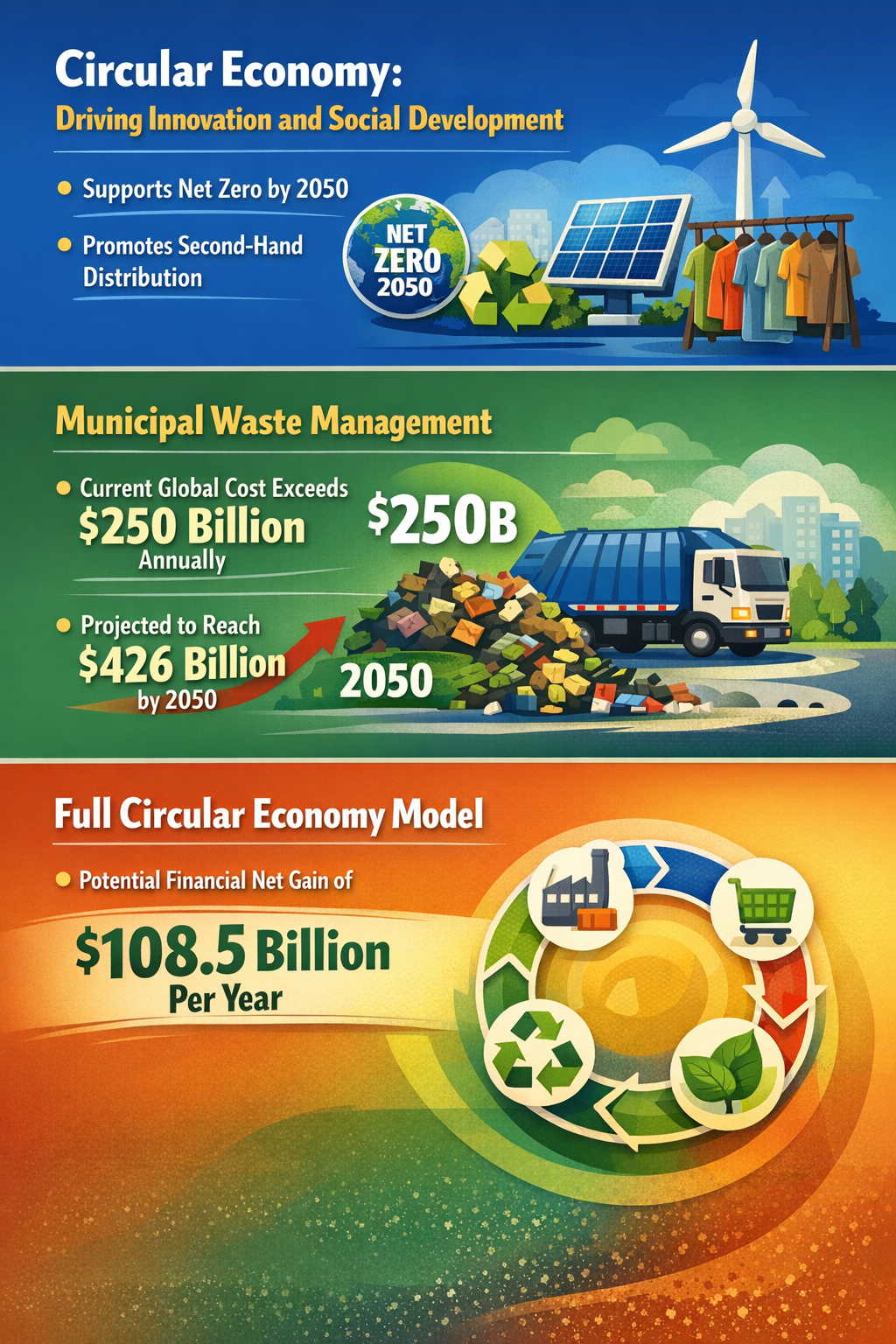
- A full circular economy model, with waste management at its core, could translate to a financial net gain of US$ 108.5 billion per year. AlJ.com. Published 04/04/2026.
- As well as helping towards net zero emissions by 2050, circular economy principles allow for innovation and social development through distribution of second-hand products and resources. Climate Action for Associations. Published 15/03/2026.
- EU Regulation 2025/40 sets out sustainability and labelling requirements for packaging throughout its life cycle, aiming to prevent unnecessary packaging, promote reuse, refill and recycling, and contribute to the circular economy and climate neutrality by 2050. Devera.ai. Published 02/05/2026.